
Explosive anger can damage relationships, create problems at...Read More
Living with ADHD and bipolar together can feel emotionally exhausting and difficult to understand. Many people struggle for years before realizing their impulsivity, mood swings, emotional intensity, and concentration problems may be connected to two overlapping mental health conditions instead of one.
ADHD and bipolar together can create symptoms that affect relationships, work performance, emotional stability, sleep, and daily functioning. Because both conditions share certain traits, proper diagnosis is essential for building an effective treatment plan.
At Gimel Health, psychiatric treatment focuses on identifying overlapping mental health conditions and creating personalized care plans that address the full picture rather than isolated symptoms.
Yes. ADHD and bipolar together can absolutely occur in the same person. Research shows that individuals with ADHD are at a higher risk of developing bipolar disorder compared to the general population.
While the two conditions are separate psychiatric disorders, they can overlap in ways that make diagnosis more challenging. Many symptoms associated with ADHD and bipolar together appear similar at first glance, especially impulsivity, emotional dysregulation, restlessness, and difficulty concentrating.
This overlap sometimes leads to delayed diagnosis or treatment focused on only one condition while the second remains unrecognized.
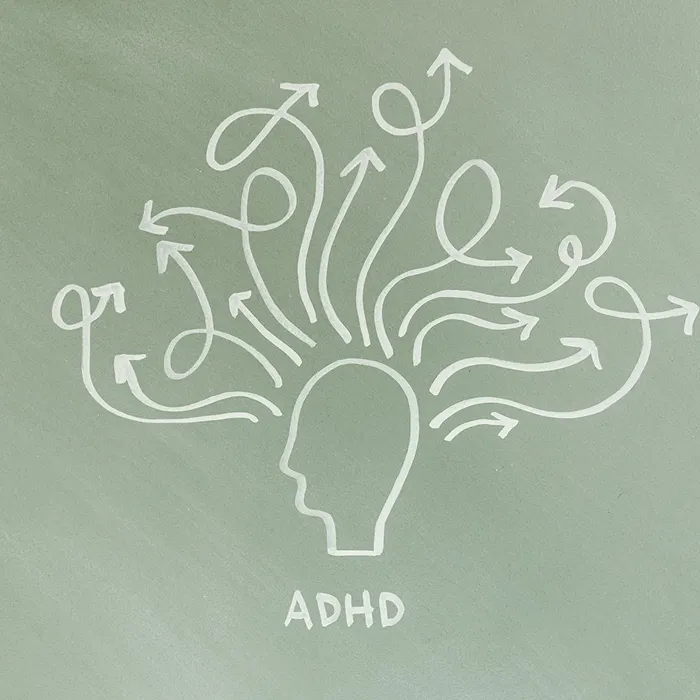
One reason ADHD and bipolar together can be difficult to diagnose is because both conditions may involve:
However, the underlying patterns behind these symptoms are often different.
ADHD symptoms tend to remain more chronic and consistent over time, while bipolar disorder typically involves distinct mood episodes that may include mania, hypomania, or depression.
At Gimel Health, psychiatric evaluations focus on understanding long-term symptom patterns rather than relying only on isolated emotional episodes.
People living with ADHD and bipolar together may experience symptoms from both conditions simultaneously.
Common ADHD symptoms may include:
Common bipolar symptoms may include:
When ADHD and bipolar together occur, symptoms may become more intense and harder to manage without treatment.
Some individuals experience emotional dysregulation that feels constant, while others cycle between depressive episodes and periods of heightened energy or impulsive behavior.
Emotional dysregulation is one of the most challenging aspects of ADHD and bipolar together.
Patients may experience:
Because both conditions affect emotional regulation differently, symptoms can become overwhelming without proper psychiatric support.
Many adults with ADHD and bipolar together report feeling misunderstood because emotional reactions may appear unpredictable or disproportionate to the situation.

ADHD and bipolar together often look different in adults compared to children or teenagers.
Adults may struggle with:
Some adults are initially diagnosed with anxiety or depression before clinicians recognize the presence of ADHD and bipolar together.
At Gimel Health, psychiatric treatment plans are individualized to address overlapping mental health conditions and long-term emotional functioning.
Diagnosing ADHD and bipolar together usually requires a detailed psychiatric evaluation rather than a quick symptom checklist.
Psychiatrists may evaluate:
The goal is to understand whether symptoms are connected to ADHD, bipolar disorder, or both conditions together.
A proper diagnosis is important because treatment approaches differ significantly between the two disorders.
Treatment for ADHD and bipolar together often involves a combination of medication management, therapy, and lifestyle support.
Psychiatrists may use:
Treatment usually focuses on stabilizing mood symptoms first before addressing ADHD symptoms more directly.
Because stimulant medications may affect mood stability in some bipolar patients, psychiatric supervision is especially important when treating ADHD and bipolar together.
Yes. Medication can help many patients living with ADHD and bipolar together, especially when treatment is carefully monitored and personalized.
The goal of medication is not to eliminate emotions or personality traits. Instead, treatment aims to improve:
Patients who receive proper treatment for ADHD and bipolar together often report improved relationships, reduced emotional overwhelm, and better overall stability.
At Gimel Health, psychiatric medication management is personalized based on each patient’s symptoms, diagnosis, and treatment response.
Living with ADHD and bipolar together can feel overwhelming without support, but many people improve significantly with proper diagnosis and treatment.
Long-term psychiatric care may help reduce:
Consistent treatment often improves emotional awareness, daily functioning, and overall quality of life.





Yes, it is possible to have ADHD and bipolar together. These are two separate mental health conditions, but they can occur in the same person at the same time. Research suggests that people with ADHD may have a higher risk of developing bipolar disorder compared to the general population. Because both conditions involve impulsivity, emotional intensity, and concentration difficulties, symptoms can overlap and make diagnosis more complicated. A comprehensive psychiatric evaluation is important for distinguishing between the two disorders and identifying whether both conditions may be contributing to emotional and behavioral symptoms.
Psychiatrists look closely at symptom patterns over time when evaluating ADHD and bipolar together. ADHD symptoms are usually chronic and consistent, often beginning in childhood and continuing into adulthood. Bipolar disorder, on the other hand, typically involves distinct mood episodes that alternate between depression and mania or hypomania. Doctors may assess sleep patterns, emotional regulation, impulsivity, energy levels, family history, and mood cycles to determine whether both conditions are present. Proper diagnosis is important because treatment approaches for ADHD and bipolar disorder can differ significantly and sometimes require careful medication management.
In some cases, stimulant medications used to treat ADHD may worsen bipolar symptoms if mood instability is not properly managed first. This is why psychiatrists often focus on stabilizing bipolar symptoms before introducing ADHD medications. Some patients tolerate stimulant medications well under psychiatric supervision, while others may need alternative treatment strategies. Careful monitoring is especially important for people living with ADHD and bipolar together because emotional regulation and mood stability can be sensitive to medication changes. Treatment plans should always be individualized based on the patient’s symptoms, history, and treatment response.
People living with ADHD and bipolar together may experience a combination of attention difficulties, emotional dysregulation, impulsivity, mood swings, sleep disruption, irritability, and restlessness. ADHD symptoms often include distractibility, disorganization, forgetfulness, and poor time management. Bipolar symptoms may involve depressive episodes, mania, increased energy, racing thoughts, or severe mood changes. When both conditions occur together, emotional reactions and impulsive behavior may become more intense and difficult to manage. Many adults report feeling emotionally overwhelmed or misunderstood before receiving an accurate psychiatric diagnosis.
Yes, therapy is often an essential part of treatment for ADHD and bipolar together. Medication may help improve mood stability, attention, and emotional regulation, but therapy helps patients develop practical coping strategies for daily life. Cognitive behavioral therapy (CBT), emotional regulation therapy, stress management, and psychoeducation are commonly recommended. Therapy can also help patients recognize symptom patterns, improve communication skills, manage impulsive behavior, and build healthier routines. Combining therapy with medication management often produces more sustainable long-term improvement than relying on medication alone.
A person should seek professional psychiatric support if symptoms begin affecting relationships, work performance, emotional well-being, sleep, or daily functioning. Warning signs may include severe mood swings, chronic impulsivity, difficulty focusing, emotional outbursts, depression, racing thoughts, or periods of unusually high energy followed by emotional crashes. Many people delay treatment because they assume their symptoms are personality-related or stress-related. However, early diagnosis and treatment for ADHD and bipolar together can significantly improve emotional stability, impulse control, and overall quality of life.
Have questions about our health solutions or need support? Reach out using the form below, and our specialized team will respond promptly to assist you.
(201) 815-4351
440 West Str, Ste 307, Fort Lee Bergen County NJ 07024
Gimel Health offers precision psychiatry and medication management for mood disorders, ADHD, anxiety, depression, and more — serving patients in New Jersey and New York.
Services
Services in New Jersey
Services in New York
Explosive anger can damage relationships, create problems at...Read More
If you have been searching for OCD treatment...Read More
If you have searched for pills for anger...Read More
Roughly three-quarters of menstruating people experience some form...Read More
If you are considering a psychiatric evaluation NYC...Read More
If you grew up hearing the term “manic...Read More
We use cookies to improve your experience on our site. By using our site, you consent to cookies.
Manage your cookie preferences below:
Essential cookies enable basic functions and are necessary for the proper function of the website.
These cookies are needed for adding comments on this website.
Google reCAPTCHA helps protect websites from spam and abuse by verifying user interactions through challenges.
Google Tag Manager simplifies the management of marketing tags on your website without code changes.
Statistics cookies collect information anonymously. This information helps us understand how visitors use our website.
Vimeo is a video hosting platform for high-quality content, ideal for creators and businesses to showcase their work.
Service URL: vimeo.com (opens in a new window)
You can find more information in our Cookie Policy and Privacy Policy.

Comprehensive services are designed for each individual. Treatment of Anxiety, Depression, ADHD, Eating Disorders,
Psychosis, schizophrenia, and other psychiatric conditions.
Sign up to our newsletter