
Depression Awareness Month: What Depression Really Looks Like and When to Get Help
October is widely observed as Depression Awareness Month, and National Depression Screening Day falls during Mental Illness Awareness Week in
Distinguishing ADHD vs Bipolar disorder can be confusing. Both involve intense emotions, bursts of energy, and difficulty with focus or impulse control. Yet, despite these shared experiences, they are different mental health conditions that require unique care approaches.
At Gimel Health, we understand how challenging it can be for patients and families to find clarity. Our team of experienced mental health professionals is here to help guide you through an accurate diagnosis and an effective treatment plan tailored to your needs.
Attention-deficit/hyperactivity disorder (ADHD) is a neurodevelopmental condition marked by ADHD symptoms such as inattention, impulsivity, and hyperactivity. It often begins in childhood and can persist into early adulthood and beyond.
Bipolar disorder, on the other hand, is a type of mood disorder characterized by alternating manic episodes, depressive episodes, or periods of stability. These mood fluctuations can deeply affect daily life, relationships, and work.
While both conditions can cause emotional dysregulation, ADHD patients experience it consistently, while bipolar mood changes occur in distinct mood episodes; often lasting days or weeks.
Research from the National Institute of Mental Health shows that many people diagnosed with ADHD may also develop bipolar disorder later in life, a phenomenon known as comorbidity. Understanding this relationship is vital for effective, long-term mental health care.

Many symptoms overlap. Both ADHD and bipolar can cause distractibility, racing thoughts, irritable mood, and impulsive behaviors. However, the diagnostic criteria differ in how these symptoms appear over time.
In ADHD, symptoms are persistent and typically begin during childhood. In bipolar disorder, symptoms occur in distinct mood episodes; periods of manic symptoms (elevated energy, decreased sleep, grandiosity) or depressive symptoms (fatigue, loss of interest, feelings of worthlessness).
Because of these similar symptoms, some people with bipolar disorder are initially diagnosed with ADHD, or vice versa. A thorough differential diagnosis by a trained mental health professional is critical. At Gimel Health, we take time to review your family history, age of onset, and overall pattern of functioning to ensure an accurate diagnosis.
Studies have highlighted the frequent ADHD comorbidity in individuals with bipolar disorder. This overlap often leads to high comorbidity rates and can make both conditions more difficult to treat.
ADHD patients with bipolar disorder may experience:
These factors contribute to a higher risk of suicide attempts, particularly in young adults. That’s why it’s crucial to find mental health care providers who understand both conditions.
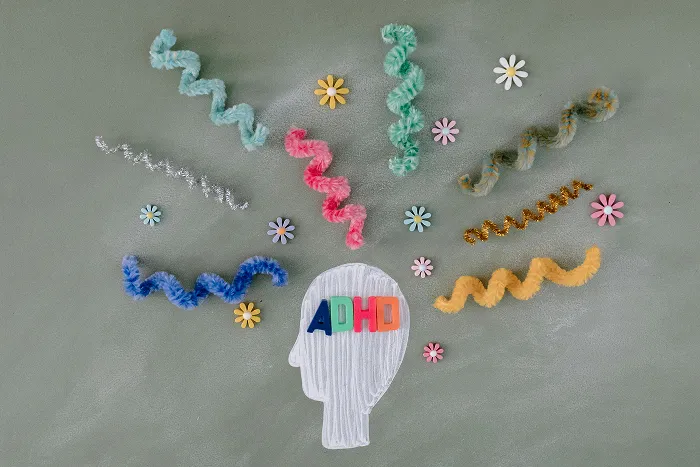
When ADHD and bipolar disorder occur together, treatment has to account for both at once. The order matters, because medication that helps one condition can destabilize the other if it is introduced too early. At Gimel Health, care is sequenced carefully and monitored closely, with the goal of steadying mood first and then addressing attention and focus.
Mood stabilizers usually come first. Medications such as lithium, valproate, or other anticonvulsants are generally used to reduce the frequency and intensity of manic and depressive episodes. In some cases a clinician may add an antipsychotic medication to help with more severe symptoms. Stabilizing mood early lowers the risk of a stimulant later tipping someone toward a manic or mixed episode.
ADHD medication is added with caution. Once mood is more stable, stimulant or non-stimulant options for ADHD may be considered. These are introduced gradually and watched closely, because stimulants can worsen mood symptoms in some people with bipolar disorder. The aim is to improve focus without destabilizing mood, and dosing is adjusted based on how a person responds.
Therapy supports both conditions. Approaches such as cognitive behavioral therapy, dialectical behavior therapy, and motivational interviewing can help with emotional regulation, impulsivity, and the day-to-day executive function challenges that come with either diagnosis. Therapy also gives people practical tools for managing routines, sleep, and stress, all of which affect both ADHD and bipolar symptoms.
Care is coordinated over time. Managing two conditions together works best when medication and therapy are reviewed on an ongoing basis. That includes watching for related concerns such as anxiety, sleep problems, or substance use, and adjusting the plan as symptoms change. Structured follow-up helps catch early warning signs before they become a crisis.
The relationship between ADHD and bipolar disorder is complex. Both may share underlying genetic factors, family history, and neurobiological differences. According to several systematic reviews and longitudinal studies, early signs of ADHD in childhood may predict later mood disorders such as bipolar.
Certain triggers can worsen symptoms in both conditions, including sleep problems, sleep deprivation, or substance use. Some conduct disorder or oppositional defiant disorder traits can also appear in adolescent psychiatry settings, making early intervention essential.
At Gimel Health, our clinicians stay informed on the latest research in Affective Disorders, ensuring every patient receives evidence-based and compassionate treatment.

The biggest difference between ADHD vs Bipolar disorder lies in timing and pattern.
A person with ADHD might have trouble focusing daily, while someone with bipolar might have weeks of extreme high energy followed by deep lows.
Those with both conditions often describe a hard time managing daily routines, work, and emotional balance. Identifying overlapping symptoms early helps clinicians create a more effective treatment plan and prevent unnecessary distress.
Navigating ADHD vs Bipolar can feel overwhelming, but the right care brings clarity. Understanding the different conditions, learning to recognize mood fluctuations, and working with a trusted mental health professional can make all the difference.
At Gimel Health, we believe that every person deserves personalized, compassionate, and scientifically grounded support. Whether you’re experiencing adult ADHD, mood disorders, or uncertainty about your diagnosis, our team can guide you toward lasting stability.
If you or someone you love struggles with focus, energy swings, or emotional imbalance, reach out to us today for a confidential consultation.
October is widely observed as Depression Awareness Month, and National Depression Screening Day falls during Mental Illness Awareness Week in

The honest answer depends on which ADHD medication you mean and which state you’re in, and the rules for New
Someone searches “ADHD testing NJ,” finds a provider quoting $2,200 and a six-week wait, and assumes that’s just what getting
Your journey to better mental health starts here. With advanced expertise in biology and psychiatry, I build exclusive medication plans backed by science. Contact me to schedule your initial consultation.
(201) 815-4351
440 West Str, Ste 307, Fort Lee Bergen County NJ 07024
Yes. Many people experience both conditions, known as comorbid ADHD. It requires careful evaluation and a tailored treatment plan to address both mood episodes and attention difficulties.
ADHD causes continuous distractibility and restlessness, while bipolar mood changes occur in distinct phases, manic episodes or depressive episodes. A mental health professional can help differentiate these through a structured diagnostic criteria review.
In some cases, stimulant medication can intensify manic symptoms if mood is not stabilized. That’s why mood stabilizers are typically introduced first before stimulant treatment begins.
Research points to shared genetic factors, family history, and early signs in adolescent psychiatry. Environmental stressors and trauma can also raise the higher risk of dual diagnosis.
Yes. Therapy, lifestyle adjustments, and sleep regulation can reduce emotional dysregulation and improve daily functioning. At Gimel Health, we help you find the treatment plan that best suits your needs.
Yes. Children and young adults can experience both, though early diagnosis requires caution. Early evaluation helps prevent worsening mood disorders or psychotic symptoms later in life.
Yes. Bipolar II involves hypomanic episodes rather than full mania, so its highs can look like the impulsivity and high energy seen in ADHD. That overlap makes bipolar II easier to confuse with ADHD, and people with both may notice depressive symptoms more often than manic ones. A careful evaluation helps sort out which symptoms belong to which condition, which in turn guides the right combination of treatments.
You may be dealing with a related condition such as cyclothymic disorder, which involves chronic mood shifts that are less intense than full bipolar episodes but still disruptive. Emotional dysregulation also shows up in other conditions and can be triggered by stress or poor sleep. A clinician can help clarify whether your symptoms point to a milder mood disorder, early signs of bipolar II, or something else. You can read more about cyclothymic disorder on our conditions page.
Yes. Both conditions are linked to executive function difficulties such as planning, organizing tasks, and managing impulses. Treatment often pairs medication with practical strategies, including coaching and therapy that build self-monitoring and structure. Addressing these skills can ease the frustration that builds up when work or daily routines feel hard to manage.
Research suggests that people who have both ADHD and bipolar disorder can face a higher risk of suicidal thoughts or attempts, particularly when depressive episodes or substance use are also present. This is one of the reasons an integrated, proactive treatment plan matters. If you or someone you know is having thoughts of self-harm, help is available right now by calling or texting 988, the Suicide and Crisis Lifeline, in the US.
We use cookies to improve your experience on our site. By using our site, you consent to cookies.
Manage your cookie preferences below:
Essential cookies enable basic functions and are necessary for the proper function of the website.
These cookies are needed for adding comments on this website.
Google reCAPTCHA helps protect websites from spam and abuse by verifying user interactions through challenges.
Google Tag Manager simplifies the management of marketing tags on your website without code changes.
Statistics cookies collect information anonymously. This information helps us understand how visitors use our website.
Vimeo is a video hosting platform for high-quality content, ideal for creators and businesses to showcase their work.
Service URL: vimeo.com (opens in a new window)
You can find more information in our Cookie Policy and Privacy Policy.

Comprehensive services are designed for each individual. Treatment of Anxiety, Depression, ADHD, Eating Disorders,
Psychosis, schizophrenia, and other psychiatric conditions.