
Explosive anger can damage relationships, create problems at...Read More
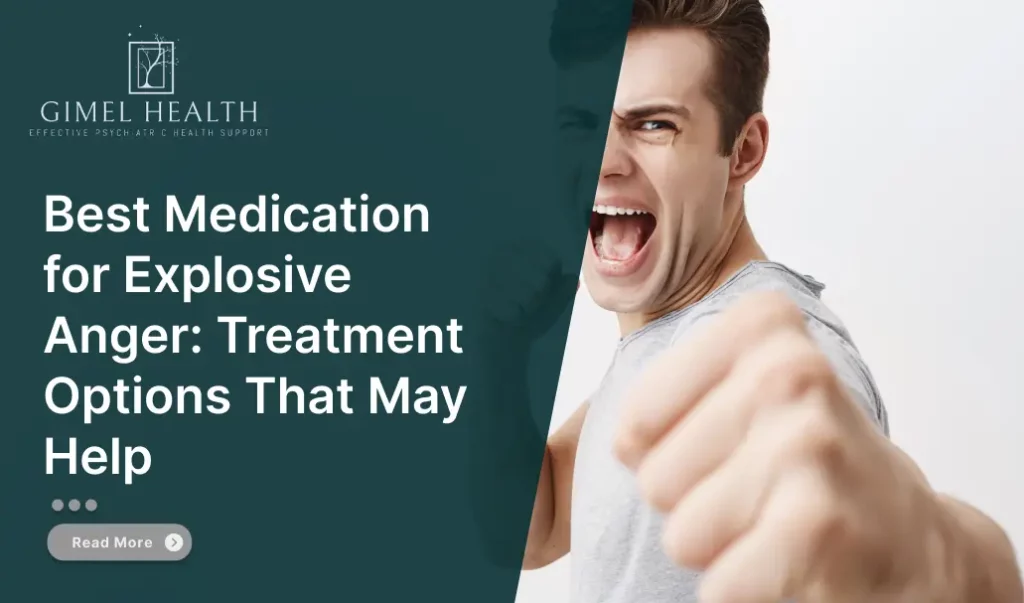
Explosive anger can damage relationships, create problems at work, and leave people feeling ashamed or emotionally exhausted after an outburst. Many individuals struggling with sudden rage episodes eventually begin searching for the best medication for explosive anger because therapy and coping strategies alone may not feel enough.
The truth is that there is no single “best” medication for explosive anger that works for everyone. The right treatment depends on the underlying cause of the anger, the patient’s mental health history, and how symptoms appear in daily life.
At Gimel Health, psychiatric treatment focuses on identifying the root causes behind emotional dysregulation and developing personalized treatment plans that may include medication management, therapy, and ongoing psychiatric care.
Before determining the best medication for explosive anger, psychiatrists first evaluate what may be contributing to the emotional outbursts.
Explosive anger is often linked to underlying mental health conditions rather than personality alone. Common causes include:
Some individuals experience explosive anger because their nervous system remains in a constant state of emotional overload. Others may struggle with impulsivity, emotional regulation, or mood instability connected to psychiatric conditions.
Our Gimel Health Services, psychiatric evaluations examine emotional symptoms within the broader context of mood, anxiety, trauma, and behavioral health conditions before recommending treatment.

There is no universal best medication for explosive anger because treatment depends on the individual diagnosis and symptom pattern.
Psychiatrists typically prescribe medications based on the underlying condition contributing to aggressive reactions or emotional dysregulation. In many cases, reducing anxiety, impulsivity, or mood instability also reduces explosive anger episodes.
The best medication for explosive anger for one patient may not work well for another. This is why psychiatric treatment plans are highly individualized.
Antidepressants are commonly prescribed when explosive anger is connected to depression, anxiety, PTSD, or emotional sensitivity.
Selective serotonin reuptake inhibitors (SSRIs) may help regulate mood and reduce emotional reactivity in some individuals. For patients whose anger is driven by chronic anxiety or emotional overwhelm, antidepressants may significantly reduce irritability and impulsive reactions.
In some cases, psychiatrists consider antidepressants among the best medication for explosive anger when emotional instability is strongly linked to mood disorders.
Mood stabilizers are sometimes prescribed for patients who experience severe mood swings, impulsive aggression, or bipolar-related anger symptoms.
These medications help regulate emotional highs and lows instead of simply suppressing anger. Patients with sudden rage episodes or emotional volatility may benefit from mood stabilization as part of a broader treatment plan.
For individuals with bipolar disorder or severe emotional dysregulation, mood stabilizers may become the best medication for explosive anger due to their ability to improve long-term emotional control.

Adults with ADHD often struggle with frustration tolerance, impulsivity, and emotional regulation difficulties.
In these cases, proper ADHD treatment may reduce reactive anger by improving focus, emotional processing, and impulse control. Many adults do not realize their anger symptoms may actually be connected to untreated ADHD.
Psychiatrists sometimes identify ADHD treatment as the best medication for explosive anger when emotional reactions are tied to impulsivity rather than mood disorders.
Chronic anxiety can place the nervous system in a heightened state of alertness, making emotional reactions more intense and easier to trigger.
Some anti-anxiety medications may help patients who experience explosive anger linked to panic, chronic stress, or hypervigilance. Reducing overall nervous system activation can lower emotional reactivity and improve frustration tolerance.
However, anti-anxiety medications are not appropriate for every patient and require careful psychiatric supervision.
In more severe psychiatric cases involving agitation, aggression, psychosis, or extreme mood instability, psychiatrists may prescribe atypical antipsychotic medications.
These medications are generally reserved for situations where emotional dysregulation becomes severe or dangerous. They may be used alongside therapy and other medications as part of a comprehensive psychiatric treatment plan.
Even when patients find the best medication for explosive anger, medication alone usually is not enough for lasting emotional improvement.
Many psychiatrists combine medication treatment with:
Clinical anger management approaches often focus on identifying triggers, improving emotional awareness, and strengthening coping mechanisms.
The combination of therapy and medication often produces more sustainable emotional regulation than either treatment alone.
Occasional frustration is normal. However, recurring rage episodes may indicate an underlying mental health condition that requires professional evaluation.
You may benefit from psychiatric treatment if you experience:
At Gimel Health Mood Disorder Treatment, psychiatric care focuses on identifying the neurobiological and psychological factors contributing to emotional dysregulation before developing personalized treatment plans.

Finding the best medication for explosive anger usually starts with a comprehensive psychiatric evaluation.
A psychiatrist may assess:
This evaluation helps determine whether anger symptoms are connected to anxiety, bipolar disorder, ADHD, trauma, impulse control disorders, or another psychiatric condition.
The goal of psychiatric treatment is not to eliminate emotions or prevent frustration completely. Instead, the goal is to improve emotional regulation, reduce impulsive reactions, and create more stability in daily life.
Patients who respond well to treatment often report:
At Gimel Health, medication management and psychiatric treatment are personalized based on each patient’s symptoms, diagnosis, and treatment goals.
The best medication for explosive anger depends on the underlying mental health condition causing the symptoms. Psychiatrists may prescribe antidepressants, mood stabilizers, ADHD medications, anti-anxiety medications, or atypical antipsychotics depending on the patient’s diagnosis and emotional symptoms. For example, someone with bipolar disorder may respond better to mood stabilizers, while a person with anxiety-related irritability may benefit more from antidepressants. Because explosive anger can have many different causes, psychiatric evaluation is essential before starting treatment. The most effective medication plan is usually individualized rather than based on a single “best” medication for everyone.
Yes, antidepressants can help reduce explosive anger in some patients, especially when anger is linked to depression, anxiety, PTSD, or emotional dysregulation. Selective serotonin reuptake inhibitors (SSRIs) are commonly prescribed because they may improve mood stability and lower emotional reactivity over time. Many patients notice reduced irritability, improved frustration tolerance, and fewer impulsive reactions after consistent treatment. However, antidepressants do not work the same way for everyone. Some patients may need a different medication category depending on their symptoms and psychiatric diagnosis. Treatment should always be monitored by a licensed psychiatric professional.
Explosive anger itself is not always considered a standalone mental illness, but it is often a symptom of underlying psychiatric conditions. Conditions such as intermittent explosive disorder (IED), bipolar disorder, ADHD, anxiety disorders, PTSD, depression, and impulse control disorders can all contribute to severe emotional outbursts and aggressive reactions. A psychiatric evaluation can help identify whether explosive anger is connected to another mental health condition. Proper diagnosis is important because the best medication for explosive anger depends heavily on understanding the root cause of the symptoms rather than simply treating anger alone.
Yes, ADHD can contribute to explosive anger and emotional dysregulation in adults. Many adults with ADHD struggle with impulsivity, frustration tolerance, emotional overwhelm, and difficulty regulating reactions during stressful situations. In some cases, untreated ADHD causes emotional responses that appear similar to anger management problems. Proper ADHD treatment may improve impulse control, attention, and emotional regulation, which can reduce explosive reactions. Many patients are surprised to learn that their anger symptoms are connected to ADHD rather than personality issues. A psychiatric assessment can help determine whether ADHD may be contributing to emotional instability.
In many cases, yes. The best medication for explosive anger often works more effectively when combined with therapy and behavioral support. Therapy helps patients identify triggers, improve emotional awareness, strengthen coping strategies, and develop healthier communication patterns. Cognitive behavioral therapy (CBT), anger management counseling, and trauma-focused therapy are commonly recommended alongside medication management. While medication may reduce emotional intensity and impulsivity, therapy addresses the behavioral and psychological patterns contributing to anger problems. Combining both approaches often leads to more sustainable long-term emotional regulation and healthier interpersonal relationships.
A person should consider professional psychiatric support when explosive anger begins affecting relationships, work performance, emotional well-being, or personal safety. Warning signs include frequent rage episodes, physical aggression, verbal outbursts, impulsive reactions, severe irritability, or feelings of guilt and shame after conflicts. If anger feels difficult to control or continues worsening over time, a psychiatric evaluation may help identify underlying conditions contributing to emotional instability. Early treatment can improve emotional regulation and reduce the long-term effects of chronic anger on mental health, relationships, and overall quality of life.
Have questions about our health solutions or need support? Reach out using the form below, and our specialized team will respond promptly to assist you.
(201) 815-4351
440 West Str, Ste 307, Fort Lee Bergen County NJ 07024
Gimel Health offers precision psychiatry and medication management for mood disorders, ADHD, anxiety, depression, and more — serving patients in New Jersey and New York.
Services
Services in New Jersey
Services in New York
Explosive anger can damage relationships, create problems at...Read More
If you have been searching for OCD treatment...Read More
If you have searched for pills for anger...Read More
Roughly three-quarters of menstruating people experience some form...Read More
If you are considering a psychiatric evaluation NYC...Read More
If you grew up hearing the term “manic...Read More
We use cookies to improve your experience on our site. By using our site, you consent to cookies.
Manage your cookie preferences below:
Essential cookies enable basic functions and are necessary for the proper function of the website.
These cookies are needed for adding comments on this website.
Google reCAPTCHA helps protect websites from spam and abuse by verifying user interactions through challenges.
Google Tag Manager simplifies the management of marketing tags on your website without code changes.
Statistics cookies collect information anonymously. This information helps us understand how visitors use our website.
Vimeo is a video hosting platform for high-quality content, ideal for creators and businesses to showcase their work.
Service URL: vimeo.com (opens in a new window)
You can find more information in our Cookie Policy and Privacy Policy.

Comprehensive services are designed for each individual. Treatment of Anxiety, Depression, ADHD, Eating Disorders,
Psychosis, schizophrenia, and other psychiatric conditions.
Sign up to our newsletter